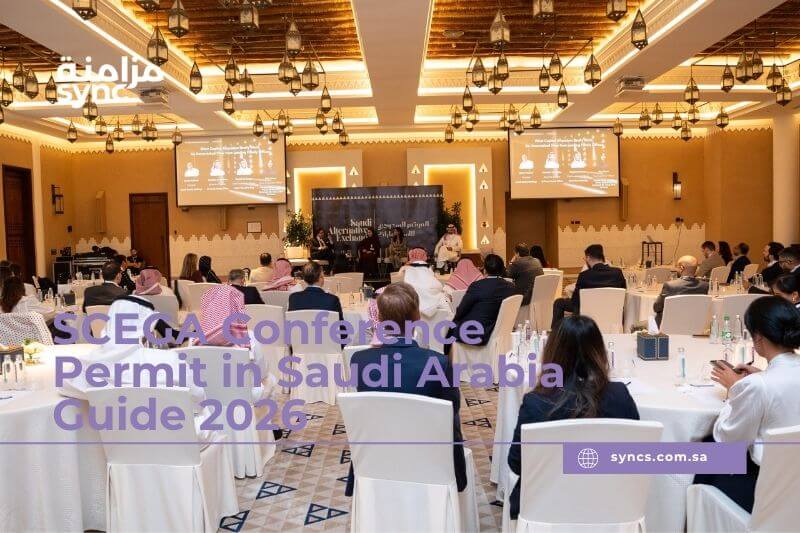
Organizing a conference in Saudi Arabia involves more than securing a venue, inviting speakers, and building an agenda. The event must also follow the licensing requirements that apply to its format and activities.
For corporate companies, professional associations, conference organizers, and international businesses entering the Saudi market, understanding the relevant approvals early can prevent avoidable changes later in the planning process.
A SCEGA conference permit is the authorization issued through the Saudi Conventions and Exhibitions General Authority for an eligible conference held in Saudi Arabia. The licensing category, requirements, and government fees depend on the type of event.
But obtaining the appropriate authorization is only one part of delivering a successful conference.
This guide explains how conference classification affects licensing, what organizers should consider before submitting an application, and how to align permit preparation with conference production, registration, and on-site operations.
What Is a SCEGA Conference Permit?
A SCEGA conference permit is an authorization for a conference that falls within the regulatory scope of the Saudi Conventions and Exhibitions General Authority.
SCEGA provides licensing services for business-event formats, including conferences, forums, seminars, and other eligible professional gatherings.
The correct licensing category depends on the event itself, not simply the title used in its marketing materials.
For example, an international investment summit, an industry association conference, and a professional seminar may have different characteristics and corresponding licensing requirements.
Organizers should confirm the appropriate category through the current official Saudi government electronic services portal.
Do Corporate Conferences in Saudi Arabia Need a SCEGA Permit?
Corporate conferences may require SCEGA authorization when they fall within the authority’s regulated business-event categories.
Consider a company organizing an industry conference in Riyadh with external delegates, panel discussions, speakers, and professional networking sessions.
The event is designed for business engagement and knowledge exchange, so SCEGA’s conference-related licensing services are an appropriate starting point for determining the applicable requirements.
However, not every corporate gathering is classified as a conference.
An internal management meeting, professional workshop, and large multi-track industry conference may be treated differently.
The event’s actual format, purpose, participants, and applicable rules should determine the licensing assessment.
For help reviewing the relevant requirements, SYNC offers SCEGA event permit application support for eligible business events in Saudi Arabia.
Local vs International Conference Permits in Saudi Arabia
One of the most important questions for conference organizers is whether their event belongs to a local or international licensing category.
SCEGA distinguishes between local and international conference-related services in its published government fee schedule.
That distinction matters because the categories have different published fees and may involve different application considerations.
| Conference category | Published SCEGA licensing fee |
|---|---|
| Local conference, seminar or forum | SAR 5,000 |
| International conference, seminar or forum | SAR 10,000 |
These are the government fees published by SCEGA, not the total cost of organizing a conference.
The specific classification must be determined from the applicable official conditions. The presence of international speakers or overseas attendees should not be treated as the only deciding factor.
Official reference: Government fee schedule published by the Saudi authority.
What Should Conference Organizers Confirm Before Applying?
Before starting a conference permit application, several decisions should already be sufficiently clear.
Conference Purpose and Business Scope
Define why the conference is taking place and what participants are expected to gain.
Is the event focused on investment, professional education, industry partnerships, government engagement, or another business objective?
A clearly defined purpose helps organizers develop a consistent event concept.
Conference Format
Confirm whether the event includes keynote presentations, panel discussions, workshops, networking sessions, exhibition areas, or other activities.
Additional components may need separate regulatory consideration.
Speaker and Delegate Structure
Identify the expected speaker profile and audience.
For international conferences, this may include overseas delegates, corporate representatives, professional associations, and industry experts.
The conference program should explain how these participants fit into the event.
Venue and Event Dates
The venue should be suitable for the conference format, expected capacity, and technical requirements.
Before finalizing the event plan, confirm that the venue arrangements align with the proposed dates and program.
Organizing Entity
Clarify which organization is responsible for the conference and which entity will submit the relevant licensing application.
This is particularly important when the conference owner is located outside Saudi Arabia.
For a more extensive documentation overview, read SYNC’s SCEGA permit requirements checklist.
How to Get a SCEGA Conference Permit in Saudi Arabia
The exact application process depends on the conference’s licensing classification and the current requirements of the relevant service.
For planning purposes, the process can be divided into five stages.
Stage 1: Confirm Conference Classification
Identify the applicable conference-related service and determine whether the planned format meets its conditions.
Stage 2: Prepare the Conference Information
Bring together the event description, organizing entity details, venue information, proposed program, and any supporting information requested by the relevant service.
Stage 3: Complete the Official Application
Access SCEGA’s electronic services platform and follow the instructions for the selected licensing category.
Provide accurate information and complete the required submission steps.
Stage 4: Respond to Requests During Review
Monitor the application’s status and respond to any requests for clarification or additional information.
Stage 5: Review the Issued Authorization
Once authorization is granted, review the conditions associated with the conference and ensure the event team understands them.
Approval remains the responsibility of the relevant government authority.
Businesses seeking assistance can discuss their application through SYNC’s Saudi event permit application service.
How Long Does SCEGA Conference Approval Take?
There is no single reliable processing period that applies to every conference category.
Processing depends on the selected service, the information submitted, and any additional requirements.
Conference organizers should distinguish between two different timelines:
Government processing time: The timeframe specified by the relevant licensing service.
Overall event preparation time: The period required to finalize the program, confirm the venue, coordinate speakers, arrange production, and complete operational preparation.
The second timeline is usually much broader than the licensing process alone.
A practical approach is to begin the classification and document review during the initial planning stage rather than waiting until production arrangements are finalized.
Conference Licensing and Event Production: Why They Should Be Planned Together
A conference permit application describes the event being organized.
Conference production turns that event concept into an operational experience.
The two processes should remain aligned.
For example, if an organizer changes a conference from a single-room seminar into a multi-stage event with an exhibition area, that change may affect the event scope, venue plan, registration requirements, and the need to review applicable approvals.
The production team should therefore understand the approved event format before finalizing major operational decisions.
Important areas of coordination include:
- Conference agenda and stage schedules.
- Speaker requirements and presentation formats.
- Stage, lighting, sound and video production.
- Delegate registration and check-in.
- Venue access and setup arrangements.
- Branding and signage.
- On-site operations and guest management.
A coordinated approach helps the organizer maintain consistency between the event concept, relevant licensing conditions, and practical delivery.
Common Conference Planning Changes That May Affect Licensing
Even a well-planned conference can evolve during preparation.
The following changes deserve particular attention.
Moving to a Different Venue
A venue change may affect the event information associated with the authorization.
Confirm whether a formal amendment or additional approval is required before assuming the existing arrangements remain valid.
Changing Conference Dates
Dates are part of the event’s core information.
Organizers should check the applicable procedures before changing the schedule of an authorized conference.
Adding an Exhibition Component
A conference may expand to include sponsor booths, product demonstrations, or an exhibition area.
Such additions should be reviewed to determine whether they change the event’s licensing or operational requirements.
Introducing Entertainment Activities
A conference reception or corporate celebration may include activities that require a separate regulatory assessment.
For a clearer explanation of the relevant authorities, see SYNC’s SCEGA vs GEA permit comparison.
Expanding the Audience or Program
A significant change in attendance, conference scope, or program structure should be reviewed against the relevant authorization conditions.
The appropriate amendment process depends on the event category and current authority requirements.
Conference Permit Considerations for GCC and International Organizers
Saudi Arabia is an important destination for companies and professional organizations arranging business events for regional audiences.
A UAE-based company may plan a finance conference in Riyadh. An organization from Bahrain or Qatar may coordinate an industry forum involving Saudi and international participants.
For such organizers, the challenge isn’t always understanding the event concept.
It is identifying the appropriate Saudi applicant arrangements, coordinating local production, and making sure the regulatory preparation reflects the planned activities.
International organizers should clarify responsibilities between the event owner, the responsible organizing entity, and local suppliers.
For a detailed explanation of the available considerations, read our guide to event permits for foreign companies in Saudi Arabia.
What About Healthcare and Technology Conferences?
Specialized conferences may involve requirements beyond general event licensing.
For instance, a healthcare conference might include professional education, scientific accreditation, pharmaceutical sponsorship, or regulated medical product activities.
A technology conference may involve product demonstrations, specialized technical installations, or other activities that require additional planning.
Rather than assuming every industry follows the same regulatory path, organizers should assess the event’s specific content and activities.
For healthcare-focused events, consult SYNC’s healthcare conference permit guide.
The event’s sector matters, but the actual activities determine which additional requirements need attention.
How SYNC Supports Conference Organizers in Saudi Arabia
SYNC is a Saudi event solutions company supporting corporate conferences, business events, exhibitions, and international event organizers.
Our integrated services connect permit-related planning with the wider requirements of conference delivery.
Depending on the project’s scope, SYNC can support:
- SCEGA application preparation and coordination.
- Conference event management.
- Stage design and event production.
- Sound, lighting, video and AVL solutions.
- Event branding and signage.
- Delegate acquisition and registration management.
- Event technology.
- Venue coordination and on-site operations.
- Photography and event documentation.
SYNC’s in-house event production approach gives conference organizers a single event solutions partner for coordinating multiple parts of their event.
For GCC and international clients, this can simplify communication between overseas stakeholders and teams delivering the conference in Saudi Arabia.
Our experience includes corporate business sessions and professional events, such as SACE Live Business Sessions in Riyadh.
The applicable government authority remains responsible for licensing decisions and approvals.
Frequently Asked Questions About SCEGA Conference Permits
How much is a SCEGA conference permit in Saudi Arabia?
The published SCEGA licensing fee is SAR 5,000 for local conferences, seminars and forums, and SAR 10,000 for international conferences, seminars and forums. Confirm the applicable category and latest fee before submitting an application.
Is an international conference permit different from a local conference permit?
SCEGA publishes separate local and international conference licensing categories. The specific conditions and classification should be confirmed through the relevant official service.
Can a company from the UAE organize a conference in Saudi Arabia?
Yes, subject to applicable organizer eligibility, licensing, and operational requirements. The company should identify the appropriate organizing entity and application arrangements.
Does a conference permit cover an exhibition area?
Not automatically. Organizers should review whether the planned exhibition activities require separate consideration or authorization.
Can conference details change after approval?
Some changes may require an amendment or additional review. The applicable process depends on the relevant licensing service and the nature of the change.
Can SYNC handle both conference permits and event production?
Yes. SYNC offers permit application support alongside conference management, technical production, delegate registration, and on-site event operations.
Planning a Corporate or International Conference in Saudi Arabia?
Whether you’re organizing a professional conference in Riyadh, an industry forum in Jeddah, or an international business gathering elsewhere in Saudi Arabia, early regulatory planning should be connected to the wider event strategy.
SYNC helps organizations review relevant permit requirements and coordinate the services needed to plan and deliver their conferences.
Discuss Your Conference Permit and Event Requirements With SYNC
Share your conference format, proposed location, dates, and expected audience. Our team can discuss permit application support alongside your event management and production requirements.