Event risk management is the process of identifying, assessing, treating, and monitoring anything that could affect attendee safety, event continuity, compliance, budget, reputation, or production quality. In Saudi Arabia, a useful risk plan should connect the venue, audience flow, permits, suppliers, technical production, weather, communications, and live operating decisions.
An event risk plan is not a document prepared once and forgotten. It is a working system that tells the event team what could happen, how serious it could be, who owns the response, what warning signs to watch, and which alternative should be activated.
This matters for corporate conferences, exhibitions, government events, product launches, activations, executive gatherings, and outdoor entertainment projects across Riyadh, Jeddah, and other Saudi cities.
Why event risk management matters in Saudi Arabia
Saudi Arabia’s event sector includes business events, exhibitions, conferences, corporate gatherings, entertainment activities, and public experiences. Each format has a different operational profile. A conference may be highly dependent on speakers, registration, simultaneous sessions, and AV reliability. An outdoor activation may depend more heavily on weather, temporary structures, power, transport, and audience flow.
A risk framework helps the organizer move from general concern to specific decisions. It can reduce avoidable delays, clarify responsibilities, improve supplier coordination, and support more consistent communication when conditions change.
The Saudi Conventions and Exhibitions General Authority’s official platform presents licensing and government-approval services for different types of meetings, workshops, lectures, conferences, and exhibitions . Entertainment events follow their own licensing route.
The General Entertainment Authority’s current service page states that an entertainment-event permit application is submitted through the Tarfeeh Portal and includes conditions relating to the applicant, venue approval, event details, required licences, and an operational plan . Requirements can differ by event type and may change, so organizers should verify the current official route for the specific event.
What should an event risk assessment cover?
1. Venue and site risks
Start with the physical site. Review capacity, entrances, exits, queue areas, loading access, emergency access, production zones, temporary structures, power distribution, accessibility, and the movement of attendees between spaces.
The risk assessment should also consider the event schedule. A venue that works well for a low-density daytime conference may need a different operating plan for a peak arrival window, a simultaneous session change, or a high-demand launch moment.
2. Crowd and registration risks
Crowd risk begins before attendees enter the venue. Assess invitation and ticketing volumes, arrival patterns, check-in speed, accreditation, security screening, queue design, signage, session transitions, and exit flows.
A registration platform can improve visibility, but technology alone does not solve congestion. The team must test the number and position of scanning points, badge-printing capacity, staff roles, fallback procedures, and the communication process for delayed or rejected registrations.
For large or complex events, define the indicators that require action. Examples include an unexpected queue at a specific entrance, a failed scanning lane, a blocked corridor, or a sudden concentration of attendees near a stage or activation.
3. Technical and production risks
Technical failures can affect sound, lighting, LED screens, presentation playback, streaming, interpretation, communications, or the timing of the show. The risk plan should identify critical equipment, single points of failure, backup arrangements, test owners, and escalation times.
Technical risk controls may include:
- A technical site survey and approved production design.
- Equipment testing and content checks before the event.
- Spare microphones, playback devices, cables, and critical components.
- Backup copies of presentations and show files.
- Power and signal planning appropriate to the venue.
- Full or targeted rehearsals for high-risk sessions.
- A clear technical escalation path during the live programme.
SYNC’s AVL and technical production service describes technical design, equipment selection, setup, rigging and staging, live operation, monitoring, and dismantling. The actual scope should always be confirmed in the project brief and technical method statement.
4. Supplier and logistics risks
A supplier risk is not limited to late delivery. It can also include incorrect specifications, incomplete staffing, restricted access, poor packaging, missing documentation, or a dependency on one person or one vehicle.
For each critical supplier, define:
- The required delivery and handover time.
- The acceptance criteria.
- The person who checks readiness.
- The fallback supplier, equipment, or workflow.
- The escalation point if delivery is late.
- The effect on rehearsal and show timing.
A master event plan should connect supplier deadlines to venue access, permits, production build, registration setup, rehearsals, and opening time.
5. Weather and environmental risks
Outdoor events require a specific weather decision process. Consider heat, wind, dust, rain, visibility, ground conditions, temporary structures, equipment protection, attendee comfort, and transport access.
Do not rely on a vague statement such as “monitor the weather.” Set a review schedule and decision thresholds. Identify what can be moved, covered, delayed, shortened, relocated, or delivered through an alternative format. The responsible decision-maker should be named before the event, not during the first operational disruption.
6. Speaker, guest, and programme risks
A late or unavailable speaker can affect the agenda, AV cues, interpretation, stage management, VIP protocol, and audience expectations. Build alternatives into the run of show:
- Remote participation where appropriate and technically tested.
- A substitute speaker or moderator.
- Flexible session order.
- Pre-recorded content where approved.
- A concise holding message for attendees.
The alternative should protect content quality and event credibility rather than simply filling time.
7. Communication and reputation risks
During a disruption, people need one reliable version of the facts. Define who communicates with the client, venue, suppliers, speakers, staff, attendees, media, and government stakeholders.
The communication plan should specify:
- The primary and backup communication channels.
- Who approves public messages.
- What information can be shared immediately.
- How updates are time-stamped.
- How rumours or incorrect information are corrected.
- How the event team records decisions and incidents.
A technically manageable problem can become a reputation issue when different teams send conflicting instructions.
8. Regulatory and compliance risks
Licensing and approval requirements depend on the event category, location, organizer, venue, content, and relevant authorities. SCEGA’s official platform provides services related to licenses and government approvals for business-event formats .
GEA’s official entertainment-permit guidance includes an operational-plan requirement and asks applicants to submit event information such as concept, venue, date, entertainment content, event type, expected audience, duration, and supporting material .
These pages should be treated as official starting points, not as a universal checklist for every Saudi event. Confirm the current requirements with the relevant authority and venue. A content page should never imply that one permit route covers every event type.
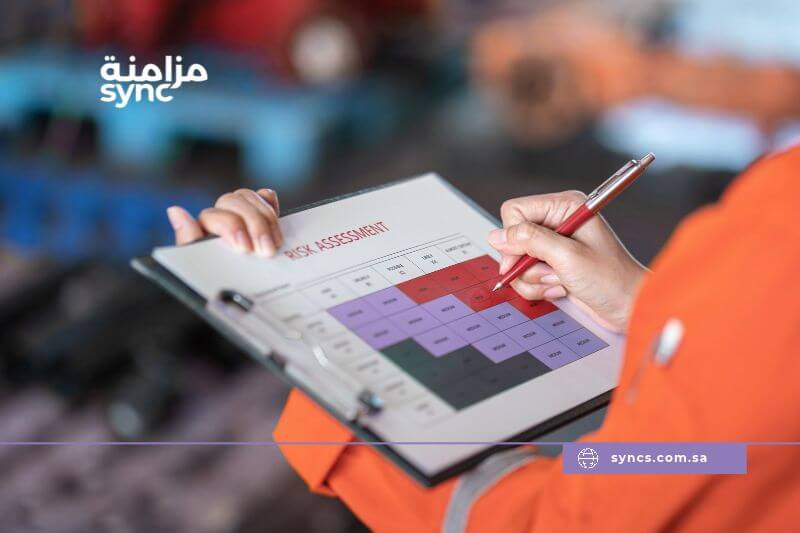
How to create an event risk register
A risk register turns the assessment into an operating tool. For each item, record:
- 1.The risk event and its cause.
- The possible operational, safety, financial, or reputational impact.
- Likelihood and impact using an agreed scale.
- Existing controls.
- Additional preventive action.
- The response if the risk occurs.
- The owner and escalation contact.
- The warning indicator or decision trigger.
- The deadline and review status.
Use a simple low, medium, and high scale if the project does not require a more detailed model. A high-impact, low-likelihood risk may still need a clear response plan. The score should support a decision, not create a false sense of precision.
Sample event risk matrix
|
Risk
|
Potential effect
|
Preventive control
|
Response
|
Owner and trigger
|
|
Registration queue grows at one entrance
|
Delayed entry and crowding
|
Test scanning capacity, split arrivals, prepare a spare lane
|
Open the spare lane and issue a coordinated update
|
Registration lead; trigger agreed queue threshold
|
|
Microphone or playback failure
|
Session interruption
|
Full test, spare equipment, local backup files
|
Switch equipment and use the approved holding workflow
|
Technical lead; immediate escalation
|
|
Critical supplier is late
|
Delayed build or rehearsal
|
Handover milestones and backup options
|
Re-sequence build and protect critical show elements
|
Production manager; missed handover milestone
|
|
Weather conditions change outdoors
|
Safety, comfort, or equipment exposure
|
Monitoring, covered areas, relocation or delay plan
|
Activate the approved venue or programme alternative
|
Event director and client; decision time agreed in advance
|
|
Main speaker becomes unavailable
|
Agenda disruption
|
Moderator plan, remote option, alternative sequence
|
Reorder programme or activate substitute
|
Programme lead; confirmation of absence
|
|
Main communication channel fails
|
Conflicting or delayed instructions
|
Primary and backup channels, contact list
|
Move to backup channel and publish one update
|
Communications lead; channel outage
|
This is a planning example, not a security, medical, evacuation, or engineering plan. Those plans must be developed with the venue and the appropriately responsible specialists and authorities.
How to build an event contingency plan
A contingency plan should answer six practical questions for each priority risk:
- 1.What confirms that the risk has occurred?
- Who has authority to make the decision?
- What is the first action?
- Who must be informed?
- What alternative can be activated?
- When is the decision reviewed or escalated?
The plan should be brief enough to use during a live event. Share it with the relevant leads, include it in operational briefings, and test critical parts during a walkthrough or rehearsal.
Medical response, fire safety, security, emergency access, and evacuation procedures must be coordinated with the venue and the relevant authorities. A general article cannot replace the approved site-specific plan.
How event technology supports risk management
Event technology can improve operational visibility and reduce manual friction. Digital registration, QR check-in, badge printing, event apps, live dashboards, polling, RFID, attendee communications, and hybrid-event systems can help the team understand what is happening and respond faster.
Technology still creates its own risks. Before launch, test connectivity, user permissions, integrations, power, devices, data flows, and manual fallback procedures. Decide what happens if the platform, network, scanner, or dashboard becomes unavailable.
SYNC’s smart event technologies page describes digital registration, QR and badge solutions, event apps, live polling, RFID, analytics dashboards, hybrid-event technology, crowd-flow and safety monitoring, and on-site support. The selected tools and data practices should be defined for the specific project rather than assumed from a general service list.
How to monitor risk during and after the event
Risk management continues after the doors open. Monitor the indicators that matter to the event: registration queues, attendance concentration, supplier readiness, technical faults, programme delays, weather, transport changes, and attendee communications.
Record incidents and near misses, not only major failures. After the event, conduct a short review:
- What happened?
- How quickly was it detected?
- Was the responsible decision-maker clear?
- Did the fallback work?
- Did the message reach the right audience?
- What should change before the next event?
Saudi Arabia’s Ministry of Finance risk-management guidance describes general principles including risk identification, assessment, treatment, monitoring, documentation, stakeholder communication, and review . It is a general government risk-management reference, not a substitute for event-specific requirements.
How SYNC can support event risk planning
SYNC positions its total event management service around coordination of strategy, venues, suppliers, speakers, technical production, regulatory approvals, and on-site operations . This integrated model can help event owners keep risk decisions connected to the delivery plan instead of treating safety, production, registration, and supplier coordination as separate workstreams.
Depending on the approved scope, SYNC can also connect event planning with smart event technologies, AVL and technical production, permit coordination, registration, rehearsals, and on-site execution. SYNC does not replace the responsibilities of the venue, government authorities, emergency services, security providers, medical providers, or specialist engineers.
If you are planning a corporate event, conference, exhibition, government function, product launch, or activation in Riyadh, Jeddah, or another Saudi city, contact SYNC to discuss the event scope and operational requirements.
Frequently asked questions
What is event risk management?
Event risk management is the structured process of identifying, assessing, treating, and monitoring risks that may affect attendee safety, event continuity, compliance, budget, reputation, or production quality.
What are the most common risks at events in Saudi Arabia?
Common categories include venue and crowd-flow risks, registration delays, technical failures, supplier and logistics delays, outdoor weather conditions, speaker availability, communication failures, and event-specific licensing or compliance requirements. The priority depends on the event type, site, audience, and programme.
How do I create an event risk assessment?
List the possible risks, causes, impacts, likelihood, existing controls, preventive actions, response steps, owners, warning indicators, and review dates. Then validate the register with the venue, client, suppliers, production team, and other relevant stakeholders.
What is the difference between a risk assessment and a contingency plan?
A risk assessment identifies and prioritizes what could happen. A contingency plan explains what the team will do if a priority risk occurs, who makes the decision, how people are informed, and which alternative is activated.
Do Saudi events require permits?
Requirements depend on the event type, location, organizer, venue, content, and applicable authority. SCEGA provides licensing and approval services for relevant business-event formats, while GEA provides licensing services for entertainment activities. Confirm the current requirements for the specific event through the relevant official channels.
Can an event-management company guarantee event safety?
No responsible provider should promise an absolute outcome. A qualified partner can improve preparation, coordination, documentation, testing, and response readiness. Final safety decisions depend on the site, responsible authorities, conditions, approved plans, and decisions made during the event.