Your company is based in Dubai, Doha, Manama, Kuwait City, or another international market. You’ve identified an opportunity to host a conference, launch a product, or bring your business community together in Saudi Arabia.
But there’s one question that often comes up before anything else:
Can a foreign company organize an event in Saudi Arabia without establishing a local company?
The short answer is that international companies can organize and participate in Saudi events, but the licensing route depends on the event type, organizer structure, and applicable regulations. Some arrangements involve working with an eligible Saudi event organizer, while others may require an appropriate Saudi business presence.
There isn’t one universal solution for every foreign company.
This guide explains how international organizers can assess their options, understand their responsibilities, and coordinate an event in Saudi Arabia without making unnecessary assumptions about company registration or permit eligibility.
Can a Foreign Company Organize an Event in Saudi Arabia?
Yes. Foreign businesses can organize or participate in events in Saudi Arabia, provided they follow the regulatory requirements applicable to their activities and organizer structure.
The key distinction is between planning an event in Saudi Arabia and being eligible to submit the relevant license application.
An overseas company might be the event owner, sponsor, exhibitor, or contracting client without necessarily serving as the registered applicant for every required approval.
Before deciding whether a Saudi legal entity is needed, identify:
- The type and purpose of the event.
- Whether the company is organizing or participating.
- Who will be responsible for the event in Saudi Arabia.
- Which party is eligible to apply for the required authorization.
- Whether a Saudi entity, authorized representative, or local arrangement is necessary.
- What responsibilities the venue and production providers will hold.
These distinctions are particularly important for businesses planning their first event in the Kingdom.
SYNC provides event permit application support in Saudi Arabia alongside integrated event management and production services for Saudi, GCC, and international companies.
Do Foreign Companies Need a Saudi Local Partner for Events?
Not necessarily in every case.
The requirement depends on the event category, licensing conditions, applicant eligibility, and the company’s legal and operational arrangements.
For business events within SCEGA’s scope, organizers should review the relevant electronic service and determine which applicant structures are accepted.
For example, SCEGA’s published workshop licensing service identifies foreign investors and foreign nationals among its target groups. That does not automatically mean every overseas company is eligible to submit every type of event application independently.
There are two broad business arrangements worth considering.
Option 1: Working With an Eligible Saudi Event Organizer
An overseas company may engage a Saudi event solutions provider to coordinate the event and support the applicable licensing process.
Depending on the relevant requirements and the agreement between the parties, the Saudi provider may help with:
- Reviewing the proposed event and its licensing implications.
- Establishing organizer and applicant responsibilities.
- Coordinating application documentation.
- Communicating with relevant parties.
- Coordinating venues and local suppliers.
- Managing event production and on-site operations.
This can be practical for international companies organizing a one-off conference, corporate gathering, product experience, or business event.
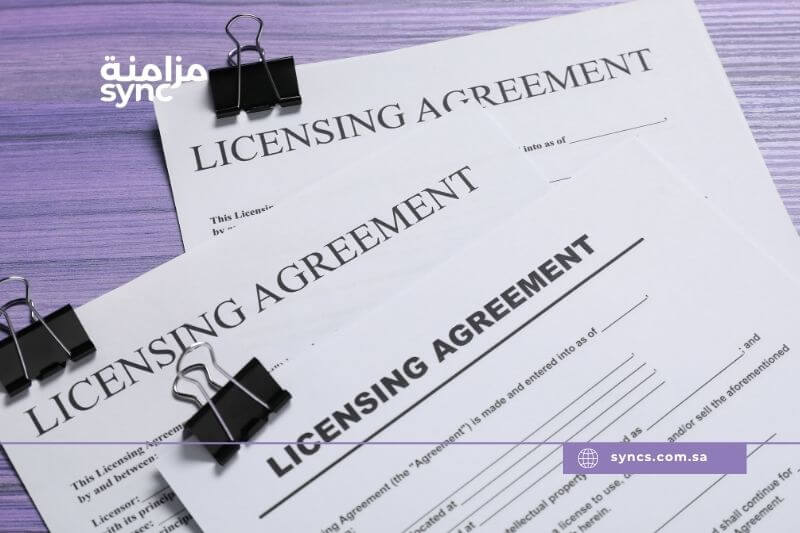
However, engaging a Saudi event company does not itself guarantee that the licensing requirements have been satisfied. The responsible applicant and legal arrangements must still be confirmed.
Option 2: Operating Through an Appropriate Saudi Business Presence
Some international businesses may already have a registered presence in Saudi Arabia or plan to establish one as part of broader commercial operations.
The appropriate registration and licensing requirements depend on their business activities and investment arrangements.
A company planning recurring commercial operations in Saudi Arabia should assess its obligations with the relevant authorities and qualified advisers.
Establishing a Saudi entity is a wider business decision, not simply an administrative step that every foreign event organizer must complete.
What If Your Company Only Wants to Participate in a Saudi Exhibition?
Participating in an exhibition is different from organizing the exhibition itself.
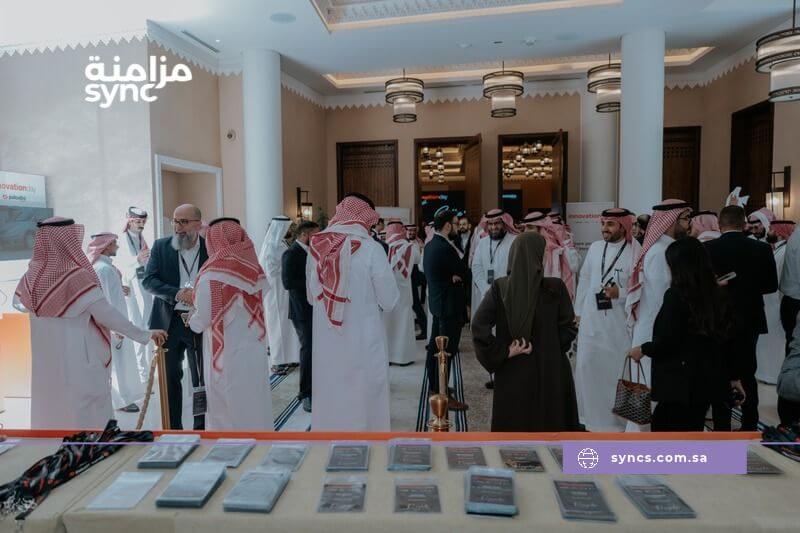
For example, a technology company from the UAE may reserve a stand at an established trade show in Riyadh.
The exhibition organizer is responsible for the overall event’s relevant licensing arrangements. Individual exhibitors must comply with the event’s participation conditions and any additional approvals applicable to their own activities.
As an exhibitor, your priorities may include:
- Confirming the exhibition organizer’s requirements.
- Reviewing stand design and build specifications.
- Arranging approved stand installation schedules.
- Coordinating technical equipment and branding.
- Managing stand staff and visitor experiences.
- Understanding any restrictions on demonstrations or promotional activities.
A company bringing an exhibition stand to Saudi Arabia should not assume it needs to apply for the same authorization as the exhibition organizer.
SYNC supports international exhibitors with exhibition stand production, event technology, technical coordination, and on-site execution through its event solutions in Saudi Arabia.
What If You’re Hosting Your Own Corporate Conference?
A foreign company planning its own conference has a different responsibility from a business attending someone else’s event.
Imagine a Bahrain-based financial services company planning a professional conference in Riyadh.
The program includes industry speakers, networking sessions, delegate registration, branded staging, and an evening reception.
Before booking the final production scope, the company should establish:
Event ownership: Which organization is hosting and financially responsible for the conference?
Organizer structure: Which entity will act as the event organizer under the applicable arrangements?
Licensing eligibility: Who can submit the relevant applications?
Venue coordination: What information and approvals does the venue require?
Production ownership: Who manages the stage, audiovisual equipment, branding, registration, and on-site operations?
International coordination: Who communicates with overseas stakeholders, speakers, suppliers, and delegates?
Clarifying these responsibilities early gives the event team a practical basis for planning.
For assistance with the relevant business-event authorization, explore SYNC’s SCEGA permit support services.
Do UAE, Qatar, Bahrain, and Kuwait Companies Follow Different Event Permit Rules?
A company’s home country can influence its business and applicant arrangements, but the specific event licensing requirements still depend on the activity, eligibility criteria, and relevant authority.
There is no reliable universal rule that applies identically to every event organized by a company from the GCC.
For example, a UAE-based brand exhibiting at an existing event, a Qatari association organizing a professional forum, and a Kuwaiti company hosting a corporate customer day may have different requirements.
Instead of assuming that nationality alone determines the permit process, international organizers should establish the exact event model.
This is particularly useful for companies coordinating their Saudi events remotely, where the decisions may involve both an overseas marketing team and a local production team.
Which Saudi Event Authority Should an International Organizer Contact?
The responsible authority depends on the nature of the activity.
SCEGA provides licensing and approval services for relevant business events, including conferences, exhibitions, meetings, workshops, and other categories within its scope.
Entertainment activities may involve the General Entertainment Authority, while certain venues or event components may require additional authorizations.
For a detailed explanation of how to distinguish between the two authorities, read our SCEGA vs GEA permit comparison.
The important thing for foreign organizers is to classify the event before determining which company or representative should handle the relevant application.
You can also consult the Saudi government’s official electronic services portal for current licensing information.
How to Prepare an International Event Brief for a Saudi Partner
Before approaching a Saudi event company, prepare a short document describing the proposed event.
It doesn’t need to be a finalized production plan.
A useful initial brief should answer:
What are you organizing? Describe the format, business purpose, and expected audience.
Who is the client? Identify the overseas company, event owner, and relevant stakeholders.
Where will it take place? Include the preferred Saudi city and venue, if known.
When is the event? Share the proposed dates and any important deadlines.
Who is attending? Distinguish between invited corporate guests, delegates, exhibitors, sponsors, speakers, and public visitors.
What support do you need? Identify whether your company needs licensing assistance, event management, technical production, or complete on-site delivery.
What is already confirmed? Explain which contracts, suppliers, venues, and arrangements are already in place.
This approach helps a prospective Saudi event partner understand the scope without requiring the overseas company to prepare every technical or regulatory document independently.
For an overview of the information that may be relevant to the licensing application, see our SCEGA permit requirements checklist.
Why Integrated In-House Event Production Matters for International Companies
Organizing an event from outside Saudi Arabia can involve several separate teams.
There may be one provider coordinating the venue, another producing the stage, another supplying audiovisual equipment, and another managing registration and delegates.
When these teams operate independently, the international client has to coordinate multiple timelines, responsibilities, and technical decisions.
An integrated event delivery model provides a more connected alternative.
SYNC combines event management, technical production, stage and AVL solutions, exhibition stand production, event technologies, and operational support within its event solutions offering.
Its in-house production approach helps international companies coordinate relevant services through one event partner.
For a GCC business organizing a conference, this means the licensing preparation can be discussed alongside the wider production requirements instead of being treated as an unrelated task.
For an exhibitor, it means stand production, branding, technical requirements, and installation can be coordinated together.
The practical benefit isn’t simply convenience. It’s clearer ownership of event planning decisions and a more connected production workflow.
How SYNC Supports GCC and International Event Organizers
SYNC is a Saudi event solutions company serving businesses organizing corporate events, conferences, exhibitions, and other professional experiences across the Kingdom.
Our work connects early planning and permit-related coordination with the services required to deliver an event.
Depending on your project’s scope, that can include:
- Event management and planning.
- SCEGA permit application support.
- Event production and fabrication.
- Stage, audiovisual, and lighting solutions.
- Exhibition stand design and production.
- Event technology and registration solutions.
- Delegate and guest coordination.
- Branding and on-site operations.
For international clients, this integrated approach makes it possible to discuss the event from initial planning through execution with one Saudi event solutions partner.
You can also explore SYNC’s completed event projects to understand the range of corporate events, business gatherings, and exhibitions supported by the company.
Frequently Asked Questions
Can a foreign company organize an event in Saudi Arabia without opening a local company?
Potentially, yes. The appropriate route depends on the event category, the foreign company’s legal arrangements, and the applicant requirements. Some projects may be coordinated through an eligible Saudi organizer, while other circumstances require a different structure.
Does every foreign company need a Saudi event partner?
No universal rule applies to every event. Local-partner requirements depend on the activity, relevant regulations, and company structure. International organizers should confirm the appropriate arrangements for their specific project.
Can a Dubai company host a corporate event in Riyadh?
Yes, subject to the applicable organizer, licensing, and operational requirements. A UAE-based company should determine which entity will organize the event and who is eligible to submit the necessary applications.
Does an international exhibitor need the same permit as an exhibition organizer?
Not necessarily. Exhibition organizers and individual exhibitors have different responsibilities. Exhibitors should verify the event’s participation requirements and any approvals applicable to their planned activities.
Can SYNC help with both event permits and production?
Yes. SYNC provides permit application support as part of its broader integrated event management and production services in Saudi Arabia.
Is a SCEGA permit guaranteed when working with a licensed event company?
No. Licensing decisions are made by the relevant government authority, and working with an event company does not guarantee approval.
Planning an Event in Saudi Arabia From Abroad?
Whether your company is based in the UAE, Bahrain, Qatar, Kuwait, Oman, or another international market, the first step is to understand how your event will be organized and which local requirements apply.
SYNC can review your event brief, discuss the applicable permit considerations, and help coordinate the wider event management and production requirements.
You can request support for a single event component or discuss a more comprehensive event delivery scope.
Discuss Your Saudi Event Plans With SYNC
Share your event type, location, proposed dates, and the services you need. Our team can review the details and discuss the next steps.