A crowded exhibition stand can still produce weak commercial results. If visitors are not engaged, qualified, captured with useful context and moved toward a next step, high footfall becomes little more than a flattering number in the post-show report.
The better objective is to build a connected system:
Footfall → Engagement → Lead → Qualified lead → Meeting → Opportunity
This guide explains how to generate more leads from an exhibition stand by improving every stage of that journey—from pre-event targeting to post-event follow-up.
Start with the right exhibition lead-generation goal
Before planning the stand experience, define what success means. “Get more visitors” is a visibility objective, not a complete lead-generation strategy.
Set targets for the outcomes that matter to the sales process:
- Target accounts reached
- Decision-makers engaged
- Qualified leads captured
- Demos completed
- Meetings booked
- Sales opportunities created
- Revenue influenced
Also define a qualified exhibition lead in advance. For example, a qualified lead may match your target industry, have a relevant business need, influence the buying decision and agree to a specific next step. This definition gives booth staff a consistent standard and lets marketing and sales measure the same funnel.
Track traffic metrics, but do not confuse them with business metrics. A stand with 300 scans may be less valuable than one with 40 contacts who match the ideal customer profile and accept a follow-up meeting.
Attract the right visitors, not just more visitors
The most effective exhibition stand marketing begins before the event opens. Your aim is not to persuade every passer-by to stop; it is to give the right people a clear reason to visit.
Start with a target-account list. Prioritise companies by industry, size, location, existing relationship, buying signal and likely decision-maker. Then build a short campaign around the event:
- Invite selected contacts through email and LinkedIn.
- Use a landing page with a clear exhibition-specific offer.
- Let prospects book a meeting or demonstration before the show.
- Give VIPs, hosted buyers and senior decision-makers a reason to attend.
- Coordinate Arabic and English messaging where the audience requires it.
In Saudi Arabia, this audience-first approach is particularly useful for B2B exhibitions in Riyadh and Jeddah, where a large registration number does not necessarily mean that the people you need will reach your stand. SYNC’s B2B event delegate acquisition service follows a similar logic: define the audience, reach relevant decision-makers, qualify responses and confirm attendance.
Give visitors a reason to stop and start a business conversation
The stand environment should make the first conversation easier. That does not mean turning the space into a design exercise or filling it with technology for its own sake.
Make three things immediately clear:
- Who is this for? Name the audience, sector or business problem.
- What can visitors learn or solve here? Offer a demonstration, assessment, comparison or useful insight.
- What should they do next? Invite them to book a meeting, see a demo or speak with a specialist.
Use a clear message at eye level, an open approach area and a simple visitor journey. Live product demonstrations, expert mini-sessions and relevant interactive experiences usually create stronger conversations than passive displays. Hospitality can help people stay, but it should support the conversation rather than become the entire reason for the visit.
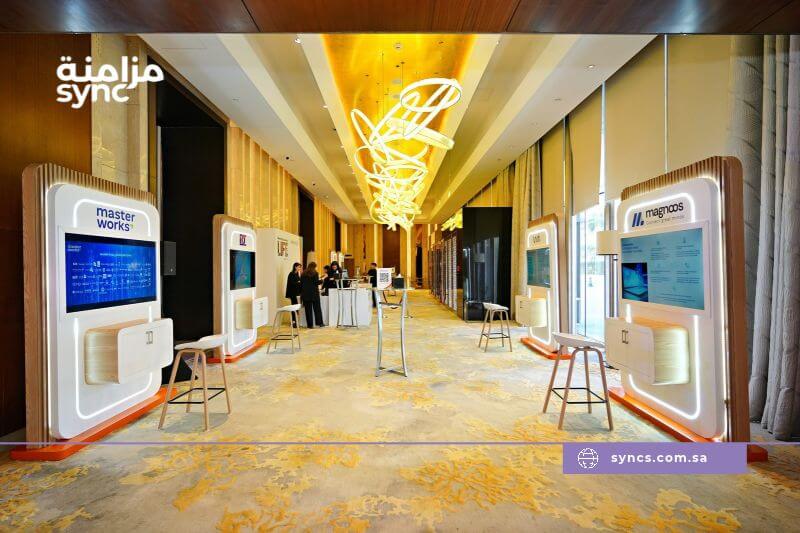
SYNC’s Watad BIG 5 Saudi Arabia exhibition stand project is a useful example of the execution layer: the project combined product presentation, visitor engagement and functional meeting areas within the exhibition environment. It demonstrates capability not a claimed lead result and illustrates why the physical experience should support the commercial objective.
Design the visitor journey around exhibition lead capture
Lead capture should not be an afterthought at the end of a conversation. Build it into the experience:
Attract → Engage → Qualify → Capture → Next step
A practical capture flow might include:
- A QR code leading to a show-specific landing page
- A badge scan or digital form
- Two or three qualification fields beyond basic contact details
- A selected interest, timeline or lead tier
- A named owner and agreed follow-up action
- Meeting or demo booking before the visitor leaves
A name and phone number alone rarely gives sales enough context. Capture the problem discussed, relevant product interest, role in the decision, expected timing and the next action. Obtain appropriate notice or permission for data collection and marketing use, and follow the organiser’s badge-scanning rules and applicable privacy requirements.
For exhibitions that need connected registration, lead retrieval, digital experiences or live reporting, SYNC’s smart event technologies include QR and digital badge solutions, event apps, lead scanning, dashboards and CRM integrations.
Train booth staff to qualify leads
Booth staff determine whether exhibition visitor engagement becomes a useful sales conversation. Give the team a short briefing, clear roles and a shared definition of lead quality.
Useful opening questions include:
- •What brings you to the exhibition?
- What are you currently trying to improve?
- Are you evaluating a solution now or researching for later?
- Who else is involved in the decision?
- What is your expected timeline?
- Would a follow-up meeting or demonstration be useful?
A visitor has entered the conversation. A lead has shared relevant contact information and interest. A qualified lead matches your criteria and has a credible business need, buying role or agreed next step. Staff should record enough context to distinguish these categories rather than applying the same label to everyone who scans a badge.
Use hot, warm and nurture tiers if they are tied to clear rules. For example, a hot lead may have an active need and accept a meeting; a warm lead may show fit but need further education; a nurture lead may be relevant but have no current project or timeline.
Use interactive experiences with a business purpose
Interactive technology is useful when it helps a prospect understand, compare or experience the offer. It is not useful merely because it attracts a crowd.
Choose an activation that supports at least one of these outcomes:
- Demonstrating a product or workflow
- Diagnosing a visitor’s challenge
- Teaching a concept
- Capturing a relevant preference
- Creating a reason to book a meeting
- Making the brand easier to remember
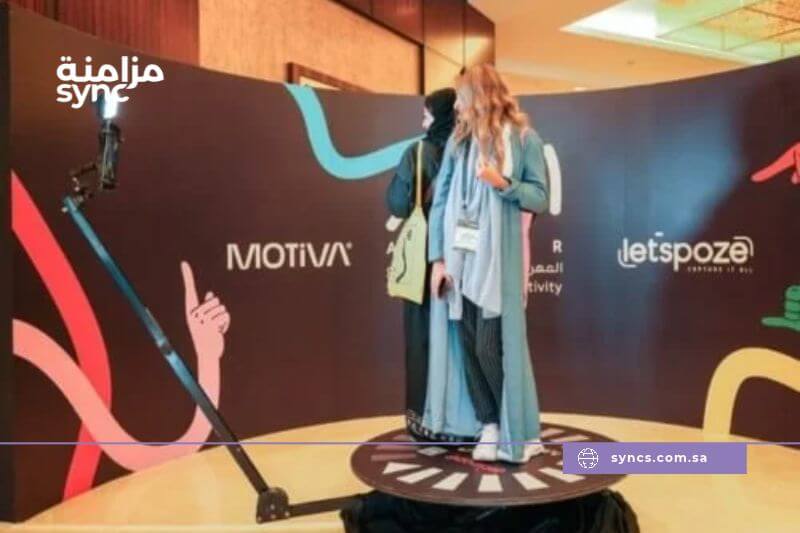
Examples include an interactive product demo, AR or VR walkthrough, touchscreen assessment, live quiz, technical presentation or guided simulation. Define the data and next step before building the experience. If an activation cannot lead naturally to a useful conversation or a measurable action, reconsider its role.
Give every visitor a clear next step
A lead-generation conversation should end with a small, explicit conversion. This is a micro-conversion: a step that moves the visitor closer to a sales opportunity without requiring an immediate purchase.
Possible next steps include:
- Book a meeting with a specialist
- Schedule a product demonstration
- Request a proposal
- Receive a technical presentation
- Download a relevant guide
- Join a post-show briefing
The best next step depends on buying intent. Do not send every person into the same sales sequence.
Follow up with exhibition leads quickly and personally
The exhibition is not the finish line. Before the show, decide who owns each lead tier, what information must be handed over and how quickly the first contact should happen.
A practical workflow is:
- Same day: clean records, check consent, add notes and assign owners.
- High-intent leads: send a personalised message tied to the conversation and confirm the agreed meeting or demo.
- Interested leads: share the relevant content or product information, then offer a specific next step.
- Nurture leads: place them in an appropriate educational sequence rather than forcing an immediate sales call.
- After the first week: review replies, meetings, disqualifications and stalled handovers.
Avoid a generic “nice meeting you at the show” message. Mention the problem discussed, the visitor’s stated interest and the action agreed at the stand. Route the record to the CRM with a clear owner, source, lead tier, next action and due date.
Measure exhibition lead-generation performance
Use a funnel dashboard that separates attention from commercial progress:
|
KPI
|
What it measures
|
|
Stand visitors
|
Reach and traffic
|
|
Engaged visitors
|
Meaningful interaction
|
|
Leads captured
|
Contact volume
|
|
Qualified leads
|
Fit and buying relevance
|
|
Meetings booked
|
Sales intent
|
|
Opportunities created
|
Commercial progress
|
|
Conversion rate
|
Funnel performance
|
|
Cost per qualified lead
|
Efficiency and lead quality
|
|
Revenue influenced
|
Business impact
|
A simple cost-per-qualified-lead formula is:
Total exhibition investment ÷ qualified leads captured
Include stand production, space, staffing, travel, promotion, technology and follow-up costs in the investment figure. Review results at several points because a complex B2B sale may not convert during the show or immediately after it.
What makes an exhibition stand generate more qualified leads?
Use this checklist before the event:
- •Clear value proposition
- Audience-specific message
- Target-account outreach
- Pre-booked meetings
- Purposeful visitor experience
- Simple, permission-aware lead capture
- Trained booth staff
- Consistent qualification questions
- Clear next-step CTA
- Named CRM owner
- Fast, personalised follow-up
- Qualified-lead and opportunity reporting
Common exhibition lead-generation mistakes
- 1.Focusing only on footfall: traffic is not pipeline.
- Waiting behind the counter: staff should invite useful conversations.
- Collecting incomplete data: scans without context create weak handovers.
- Using one pitch for everyone: adapt to role, need and buying stage.
- Skipping staff training: an attractive environment cannot fix poor conversations.
- Having no qualification process: define fit, need, timing and next step.
- Offering no clear CTA: visitors should know what happens next.
- Ignoring pre-event outreach: target accounts need a reason to find you.
- Delaying follow-up: memory and momentum fade after the show.
- Measuring only visitor numbers: report qualified leads, meetings and opportunities.
How SYNC helps turn exhibition traffic into business opportunities
Generating B2B exhibition leads requires more than a stand delivered on time. It requires alignment between the visitor environment, audience strategy, technology, staff workflow and follow-up process.
SYNC can support that ecosystem through exhibition stand production, event marketing campaigns, smart event technologies, AVL and technical production, audience acquisition and on-site execution. The relevant question is not only how to get noticed, but how to create qualified conversations that your sales team can act on.
Planning an exhibition in Saudi Arabia? Talk to SYNC about building an exhibition experience designed to attract the right visitors, capture useful information and move high-value prospects toward a next conversation.
Frequently asked questions
How do you generate leads from an exhibition stand?
Define a qualified lead, target the right accounts before the event, create a useful reason to visit, train staff to qualify conversations, capture context and follow up with a specific next step.
How do I attract more visitors to my exhibition stand?
Use a clear audience-specific value proposition, promote your presence before the event, invite target contacts, book meetings in advance and offer a relevant demonstration or experience.
How do you capture leads at an exhibition?
Use a badge scanner, QR landing page, digital form or event app, but capture more than contact details. Record interest, role, need, timeline, lead tier, consent status and agreed next action.
How do you qualify exhibition leads?
Assess fit, business need, decision-making role, buying timeline and willingness to take a next step. Separate visitors, leads, qualified leads and nurture contacts.
What makes an exhibition stand successful?
A successful stand connects audience targeting, a clear message, purposeful engagement, trained staff, responsible lead capture, fast follow-up and measurable sales outcomes.
How do you measure exhibition ROI?
Track qualified leads, meetings, opportunities, conversion rates, cost per qualified lead and revenue influenced. Compare those outcomes with the full exhibition investment and sales-cycle timeframe.
How quickly should you follow up with exhibition leads?
Clean and route high-intent leads on the same day where possible. Send a personalised follow-up promptly, then use a segmented cadence based on buying intent, fit and the next step agreed at the stand.
What is the difference between exhibition visitors and qualified leads?
A visitor has engaged with the stand. A lead has shared relevant contact information and interest. A qualified lead also matches your criteria and has a credible need, buying role or agreed next action.