Event logistics in Saudi Arabia: define the delivery scope
A useful logistics plan connects materials, people and information to the places and times they are needed. It covers deliveries, access, installation interfaces, crew arrangements, guest transfers where commissioned, readiness handover and removal. Identify the work your team owns and what the venue or individual supplier provides.
Event logistics vs live event operations
Logistics prepares and moves the resources. Live operations manages the event as guests experience it. The handover matters: a delivered screen still needs installation and testing before the show team can accept it. Name the person confirming each stage instead of marking the whole item “done” on arrival.
Discuss the required workstreams through event management services in Saudi Arabia; do not assume a supplier’s delivery price includes every installation or operating task.
Supplier access in Riyadh and Jeddah: confirm the venue instructions
Request the actual access windows, delivery entrance, vehicle arrangements, unloading area, lift restrictions, storage and clear-out deadline from the venue. Confirm who approves crew or vehicle information and when it must be submitted. Apply the venue’s requirements for this event, rather than assuming another venue’s process is standard.
Give suppliers the usable route and their destination inside the building. A delivery at the wrong entrance can interrupt guest reception or block another contractor. Check shared corridors and loading areas, and identify who can resolve an arrival problem while the project lead is occupied elsewhere.
For a Saudi programme involving imported equipment, assign the relevant freight and documentation work to a suitable specialist. Do not base the event schedule on an assumed clearance time.
Event supplier coordination checklist: schedule the dependencies
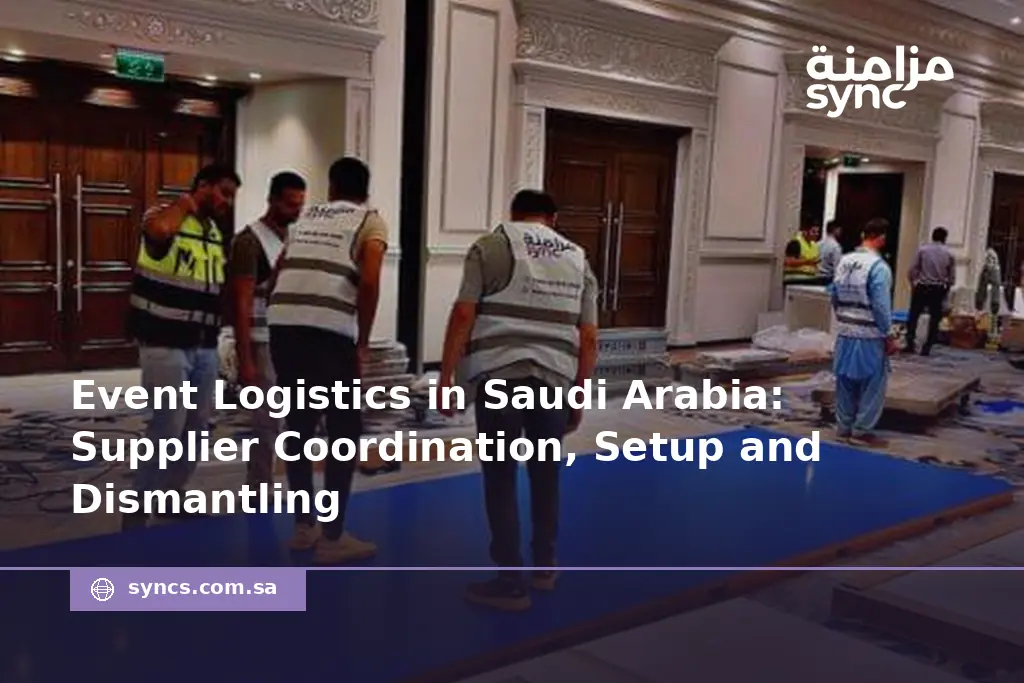
Build the installation sequence around what each supplier needs before starting. Agree these dependencies with the venue and relevant technical leads. Do not treat the example below as engineering instructions or a universal build order.
| Workstream | Confirm before the task | Owner to name | Completion evidence |
|---|---|---|---|
| Venue access | Approved route, time and work area | Venue contact and logistics lead | Access available as agreed |
| Equipment delivery | Receiver, inventory and destination | Supplier and receiving contact | Items checked; exceptions recorded |
| Installation | Preceding work released and specialist conditions met | Relevant contractor lead | Installation handed over for testing |
| Technical test | System ready and required operators present | Technical lead | Test results and open actions recorded |
| Room handover | Agreed readiness checks completed | Event lead and venue contact | Outstanding items resolved or escalated |
Request realistic estimates from each supplier for unloading, installation, testing and removal. Where tasks share a route or resource, resolve the clash before issuing times. Record who must confirm completion so the next team can start.
Crew schedules and guest transport: keep the journeys distinct
Separate crew arrival and deliveries from the guest-facing programme. Where transport is included, identify pickup points, passenger groups, arrival requirements and the person handling changes. Confirm speaker or VIP arrangements with the authorized client contact, without distributing unnecessary personal details to every supplier.
Crew plans should address reporting points, responsible supervisors, work periods, breaks and practical welfare arrangements agreed for the job. Confirm what the venue or contractor provides. A team left without an accessible reporting contact can be on site without being ready to work.
Late deliveries and supplier changes: manage the effect on readiness
Use one action record for delivery status, blockers, owner and next decision. An urgent phone call can resolve a problem, but the resulting instruction still needs to reach everyone affected. Nominate an alternative contact so the whole plan does not depend on one busy person.
When a delivery slips, identify the tasks it blocks and the latest acceptable decision point. Ask the relevant specialists whether resequencing is feasible. Obtain approval for scope or cost changes; track them in the event budget. Use the event risk and contingency plan for agreed responses to critical disruption.
Event setup and dismantling services: agree removal before opening
Confirm when guest activity ends and the venue releases areas for dismantling. Suppliers should know their removal window, approved sequence, vehicle access, packing responsibility and final destination. Define who collects client-owned materials, signage and remaining items.
Use a joint closeout record for returned items, outstanding collections, condition observations and venue handback. Resolve exceptions through the agreed contacts. A packed vehicle leaving does not establish that all client property was collected or that the venue accepted the space.
SYNC’s published DDC financial forum project in Riyadh documents event management, technical production, registration and on-site operations and logistics. It illustrates connected delivery workstreams; the page does not disclose its detailed supplier schedule or support claims about quantified time savings.
Ask an event management company in Saudi Arabia to show where the logistics responsibility ends and the venue or supplier takes over.
Frequently asked questions
What goes into event logistics for a corporate event in Saudi Arabia?
The scope may include equipment movement, supplier arrivals, access arrangements, installation coordination, staffing logistics, commissioned guest transfers, readiness handover and removal. The agreement should identify deliverables, owners and exclusions. Build the plan around the actual venue and programme, then confirm what the client and separately contracted suppliers will provide. Avoid using “logistics included” as a substitute for that breakdown: moving an item, installing it, operating it and returning it are distinct responsibilities that may belong to different parties.
Does an event coordination package automatically include setup and dismantling?
No assumption is safe without the written scope. Ask whether the package covers scheduling only, physical installation, crew supervision, equipment handling, packing, waste arrangements and final venue handback. Check that the relevant access and removal windows appear in the supplier arrangements. If your company provides branded materials or product samples, name who receives and collects them. A coordinator can manage a handover without owning the physical work, so clarify both responsibilities before comparing package prices.
How can we coordinate event suppliers who use different communication channels?
Agree an authoritative schedule and action record, then give each supplier a named contact and escalation route. Suppliers may still call or message when something is urgent; assign someone to capture decisions and update the shared instruction. Request acknowledgement for changes that affect an arrival, dependency or deadline. Keep critical notices short and specific: what changed, who acts and by when. Adding another platform will not resolve confusion if no one owns consolidating the decisions or confirming receipt.
How much setup time should we allow for an event in Riyadh or Jeddah?
There is no reliable universal allowance. Ask the venue and suppliers to estimate the actual sequence, including unloading, moving equipment, installation, technical checks, rehearsal and room handover. Identify which activities can overlap and which depend on another team finishing. Check the proposed plan against contracted access windows and shared loading resources. If the programme cannot fit, review access, scope or resources with the responsible parties before committing, rather than assuming the crew can simply work faster.
What should we do if an event supplier arrives late?
Confirm the revised arrival and which deliverables are affected, then assess the downstream tasks and the required readiness time. The logistics lead should coordinate any feasible resequencing with the venue and specialist leads. Escalate decisions about substitutions, extra cost or reduced scope to the authorized approver. Notify affected teams and record the new instruction. Do not automatically unload at another entrance or start dependent work without clearance: a quick local workaround can obstruct a guest route or create rework elsewhere.