How to plan a B2B product launch event in Saudi Arabia
A launch brings a product announcement and a live guest experience together. Start with a decision: should the audience request a demonstration, discuss distribution, understand a new capability or book a follow-up meeting? Choose one primary outcome, then decide what evidence the room needs.
Product launch event vs brand activation campaign
A launch introduces a specific offer at a defined point in time. A wider activation may keep building interaction across locations or campaigns. They can share a concept, but they need distinct scopes. Use the brand activation guide for that broader campaign discussion.
Confirm which product version can be shown, what is available for guests to try and which statements have been approved. An impressive reveal cannot resolve an unclear release date or a demonstration that promises an unavailable feature.
Product launch agendas for buyers, distributors and press
Decide which audience the launch serves first, then give each group a reason to attend.
- Buyers. A realistic use case to try and access to a product specialist who can answer technical questions.
- Distributors and partners. A commercial or training briefing and time to discuss post-launch support.
- Media. Approved facts and images, plus interview slots with the right people. Brief your sales team separately before they speak for the product.
“Part of getting the right people to show up is making it easy.”
For a Riyadh launch with both buyers and partners, share a tailored agenda with each group and specify when they can try the product or book a private conversation.
Design invitations around that purpose. State what guests will experience, where they need to be and what happens afterward. Keep media access and private buyer conversations compatible; do not put confidential material into an unrestricted presentation by accident.
For Riyadh or Jeddah, assess arrival patterns, travel needs, venue access and the actual programme date. Review prayer breaks and language requirements with the host. City names alone do not determine the right venue or operating schedule.
Product launch event checklist for production approvals
| Workstream | What to confirm | Decision owner |
|---|---|---|
| Product | Approved version, demonstration steps and what guests may handle | Client product lead |
| Message | Claims, language versions, spokesperson and released materials | Client content approver |
| Room | Sightlines, product access, trial area and interview space | Venue and event leads |
| Production | Reveal sequence, playback, sound, light and fallback | Technical lead and show caller |
| Guest response | Questions, meeting requests, handover and next contact | Client commercial lead |
Translate the table into a dated approval schedule. Record dependencies: artwork may rely on a final product name; content approval may affect rehearsal; a demonstration may need venue-authorized connectivity. Identify these before confirming a production design.
How to rehearse a live product demo for launch
Run the demonstration using the actual product, presenter, content and intended room setup. Check that the audience can see the important detail and hear the explanation. A small interface may need a screen feed; a physical product may need a controlled trial area rather than a distant stage display.
Rehearse the human sequence: who introduces the product, who advances content, who gives the reveal cue and who releases guests to the next area. The AVL and technical production scope should specify these interfaces rather than listing equipment alone.
What to do if the live product demo fails at launch
Agree a fallback with the product owner. An approved recording, explanation or later demonstration may be appropriate. Label recorded or simulated material accurately. Specify who decides to switch, what the presenter says and how unanswered questions are captured.
What to include in a product launch event proposal
Request a proposal that separates concept, venue coordination, guest services, production, content, media support and follow-up. Mark client-supplied items and exclusions. Photography, press outreach, copywriting, translation and specialist demonstrations are not interchangeable deliverables.
Assess the programme and venue requirements before committing to suppliers; determine the applicable approval route for the actual activities. An event being described as a “launch” does not by itself settle its regulatory classification. Avoid treating a venue booking as confirmation that every activity is cleared.
SYNC’s event management services can be scoped around the agreed launch workstreams. The corporate event planning checklist covers the wider planning sequence; this guide keeps the product demonstration and announcement decisions in focus.
Sales follow-up and demo requests after a product launch event
Prepare approved materials and routing before the event. Distinguish a guest who attended, a person who requested information and a meeting accepted by the sales team. Give each request an owner and an agreed response date. Do not present badge scans as sales or assume a busy trial station proves purchase intent.
Hand over completed deliverables, open product questions and follow-up actions.
What SYNC delivers for a B2B product launch event
As an event management and production company in Saudi Arabia, SYNC coordinates staging, screens and rehearsals with your product team. We agree who approves demo content and receives post-event enquiries.
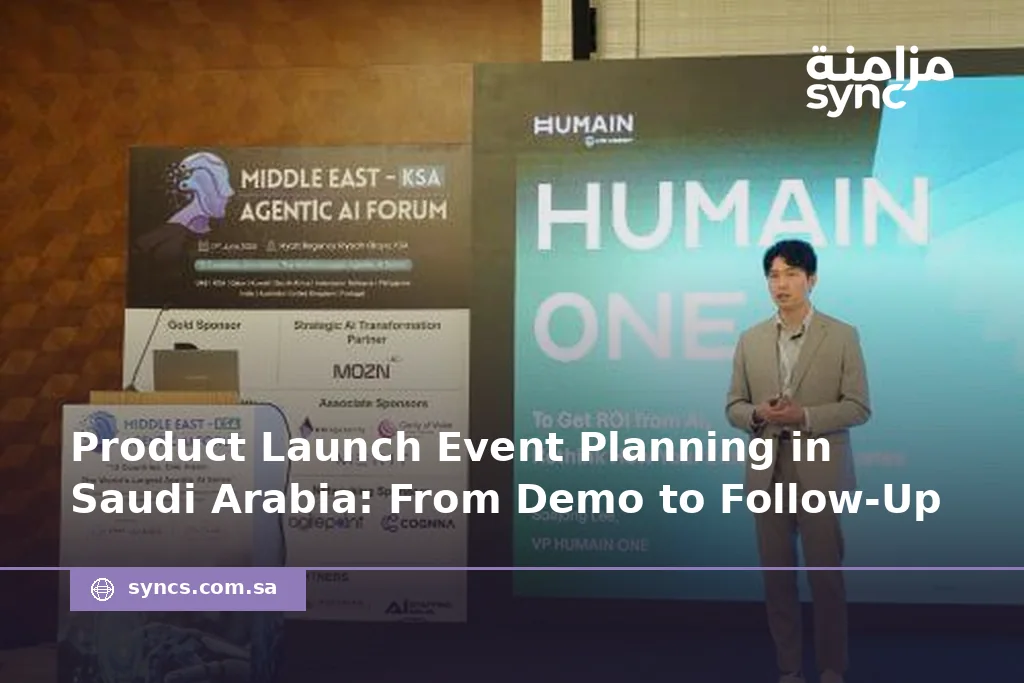
The Middle East Agentic AI Forum in Riyadh combined technical demonstrations with on-site operations managed by SYNC.
Questions about planning a product launch event and live demo
How do you plan a product launch event in Saudi Arabia?
Define the audience and the next action first, then confirm product readiness, message approval, venue requirements, demonstration, reveal sequence and follow-up ownership. Build one approval schedule across those workstreams. Check the applicable requirements for the actual activities with the responsible teams. The product team must own product facts and readiness; the event organizer coordinates delivery within the contracted scope. Test the complete guest experience before opening, including the response if the demonstration cannot proceed.
How early should product launch event planning start?
Work backward from the decisions that cannot be compressed: product readiness, guest availability, venue access, approvals, fabrication, content and rehearsal. Ask each owner for a realistic commitment rather than using a universal number of weeks. If the date is fixed and preparation is late, reduce or simplify the scope before promising the original concept. Keep a documented decision on what can be demonstrated and what must move to a later communication or private session.
Should a product demonstration be live or recorded?
Choose according to what must be proven and what the product can reliably show. A live demonstration allows real interaction; a recording can explain a process or provide an agreed fallback. Test either option through the actual room system and identify it accurately to guests. A recorded sequence should not be represented as live performance, and a simulated feature should not imply general availability. Agree the description, presenter explanation and follow-up opportunity with the product owner.
What if the live product demo fails during the launch?
Use the response agreed in rehearsal. The responsible lead decides whether to retry, move to an approved alternative or continue with an explanation and later demonstration. Give the presenter a short, accurate transition and keep the audience informed without inventing a successful result. Record affected questions and commitments for follow-up. A fallback should preserve truthful communication and programme control; it is not permission to conceal a product limitation or improvise an unapproved promise.
How can a B2B product launch show value without immediate sales?
Report agreed evidence such as relevant attendance, completed demonstrations, questions from target accounts, accepted meeting requests and subsequent actions. Keep those indicators separate from revenue. Sales teams should confirm later opportunity status and any attribution method before financial value is assigned. Review whether the event reached the intended audience and helped the next conversation. A launch may support a longer buying process, but that does not justify labelling every attendee or open opportunity as event-generated revenue.