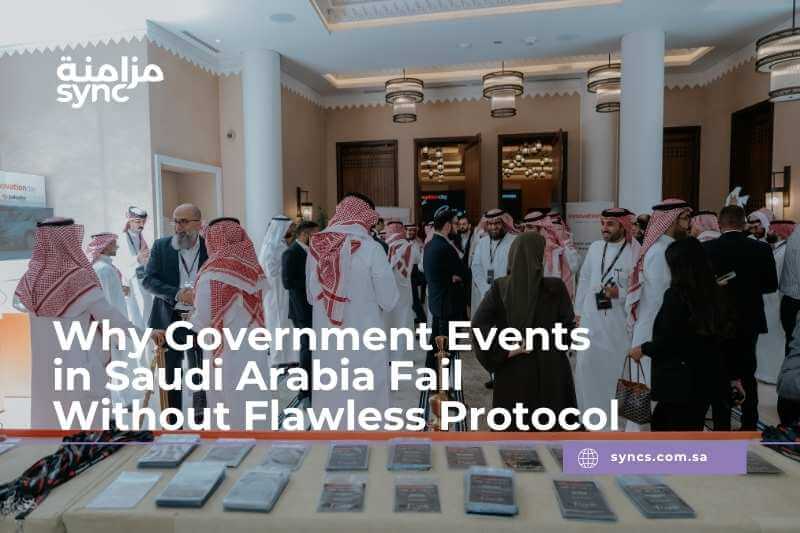
Government events in Saudi Arabia are not merely logistical undertakings they are strategic instruments of national transformation. Every official summit, ministerial conference, and opening ceremony visibly advances the Kingdom’s Vision 2030, projecting economic diversification, infrastructure ambition, and digital leadership to the world. When protocol, security, and production align with these national priorities, an event becomes a catalyst for investment, diplomacy, and public trust.
Government event management in Saudi Arabia orchestrates official functions summits, conferences, ceremonies where strict protocol, multi-agency coordination, and national messaging converge. Beyond flawless logistics, today’s government events are engines of Vision 2030: they spotlight economic diversification (promoting non-oil sectors), infrastructure & giga-projects, and digital transformation. Professional management ensures every VIP arrival, stage design, and technology integration upholds institutional credibility while showcasing the Kingdom’s forward momentum.
What Makes Government Events Different?
Government events are not corporate activations with a formal dress code. They carry institutional weight, public accountability, and often diplomatic implications. The difference lies in their purpose: they represent the state, not a brand, and are judged by protocol adherence, security integrity, and alignment with national priorities such as Vision 2030.
Government events are official functions that reflect national strategy and institutional reputation. They require zero tolerance for error, strict protocol adherence, and integration with state entities distinguishing them from corporate events where the primary focus is customer experience. In Saudi Arabia, these events actively drive economic diversification, infrastructure investment, and digital innovation.
Unique characteristics:
- Public Accountability : Outcomes are scrutinized by citizens, media, and international partners.
- Institutional Reputation : Every detail reinforces the credibility of the organizing authority.
- Multi-Stakeholder Coordination : Ministries, security forces, protocol offices, and giga-project owners must align.
- Official Protocol (بروتوكول كبار الشخصيات) : Precedence, seating, flags, and ceremonial flow follow strict official guidelines.
- Security Planning : Venue sweeps, motorcade coordination, and emergency response are integrated with state security.
- Media Visibility : Official narratives reach global audiences; controlled messaging is paramount.
- Operational Precision : Even minor technical glitches can undermine a policy announcement or investment pitch.
Government Events Types
Each official event type serves a distinct strategic purpose. Below, we map the operational DNA of key government events, emphasizing how they now integrate Vision 2030 objectives.
Government Summits (القمم الحكومية)
Purpose: High-level dialogue between heads of state or ministers on policy, trade, and cooperation.
Vision 2030 Link: Summits often conclude with joint statements on economic partnerships, digital collaboration, or infrastructure memoranda.
Planning priorities: Multi-language interpretation, secure communication, VIP motorcade staging.
Ministerial Conferences
Purpose: Sectoral policy alignment and decision-making.
Vision 2030 Link: Conferences on logistics, retail, and real estate directly advance economic diversification; smart governance tracks push digital transformation.
Operational considerations: Committee breakouts, document distribution, dedicated media briefings.
Official Ceremonies (المراسم الرسمية)
Purpose: Award presentations, national day celebrations, official inaugurations.
Vision 2030 Link: Inaugurations of new infrastructure or giga-project milestones (NEOM, Red Sea Global) serve as national milestones.
Priorities: Flag protocol, anthem cue, live broadcast, stage set reflecting project branding.
National Celebrations
Purpose: Public engagement and patriotic spirit.
Vision 2030 Link: Celebrations often spotlight economic diversification milestones or cultural heritage supporting sustainable tourism.
Operational considerations: Mass crowd management, entertainment, municipal permits.
MoU Signing Events
Purpose: Formalizing bilateral or inter-agency agreements.
Vision 2030 Link: MoUs frequently target foreign investment in non-oil sectors or technology transfer.
Protocol essentials: Table setup, flag arrangement, witness seating, photographer positions.
Investment Forums
Purpose: Attracting foreign direct investment and showcasing mega-projects.
Vision 2030 Link: These forums are the primary platform for economic diversification presenting opportunities in logistics, retail, real estate, and giga-projects.
Priorities: Ministerial keynotes, AI-powered matchmaking, investor lounges, hybrid broadcasting.
Diplomatic Meetings
Purpose: Bilateral talks, state visits, ambassador briefings.
Vision 2030 Link: Diplomacy secures trade agreements and technical cooperation for digital governance.
Operational considerations: Confidentiality, interpretation, motorcade clearance, cultural protocol.
Press Conferences
Purpose: Official announcements on policies, initiatives, or national achievements.
Vision 2030 Link: Press conferences unveil new digital services, infrastructure completion phases, or economic reform milestones.
Media needs: Podium branding, multi-camera feed, spokesperson briefing.
Government Exhibitions
Purpose: Showcasing public sector achievements and future projects.
Vision 2030 Link: Exhibitions feature smart city models, AI governance tools, and sustainable technology prototypes.
Operational considerations: SCEGA licensing, pavilion design, interactive digital displays.
VIP Visits
Purpose: Site tours of giga-projects, inspection visits, diplomatic familiarization.
Vision 2030 Link: Visits to NEOM, The Line, or Red Sea developments demonstrate progress and investor readiness.
Security coordination: Route reconnaissance, close protection, emergency medical support.
Opening Ceremonies
Purpose: Launching infrastructure, hospitals, universities.
Vision 2030 Link: Each ceremony is a tangible output of economic diversification and infrastructure expansion.
Choreography essentials: Ribbon-cutting, plaque unveiling, VIP guided tours, media pool positioning.
Core Focus Areas: Aligning Government Events with Vision 2030
Government events in Saudi Arabia have moved beyond formality they now drive the Kingdom’s three strategic pillars: economic diversification, infrastructure & giga-projects, and digital transformation. Event planners must design experiences that not only respect protocol but also advance these national objectives.
Economic Diversification: Promoting Non-Oil Sectors
Every investment forum, trade delegation, and industry conference is an opportunity to reposition the Saudi economy away from oil dependency. Government events now intentionally spotlight sectors like logistics, retail, and real estate to attract private and foreign capital.
- Event Design Implications: Panel topics, exhibition zones, and study tours are curated around logistics hubs, retail innovation, and integrated residential developments.
- Stakeholder Engagement: The Ministry of Investment and sector-specific authorities co-create content, ensuring events connect potential investors with viable opportunities.
- Case in Point: A logistics summit might include a live tour of the King Abdullah Port bonded zone, with pre-scheduled B2B matchmaking sessions using AI-driven interest profiling.
- Operational Priority: Seamless hospitality for international investors, interpreter services, and follow-up meeting facilitation.
Infrastructure & Giga-Projects: Showcasing Large-Scale Urban Designs
Saudi Arabia’s giga-projects (NEOM, The Red Sea, Qiddiya, ROSHN) are not just construction initiatives they are global invitations for partnership. Government events serve as the official launchpads for master plans, contractor briefings, and investment roadshows.
- Event Design Implications: 3D holographic models, immersive VR experiences, and scale maquettes take center stage. Opening ceremonies often occur on-site, blending protocol with hard-hat reality.
- Stakeholder Engagement: Project CEOs, international architects, and financiers participate in closed-door investment roundtables. Media coverage is tightly managed to control message timing.
- Operational Priority: Venues may be remote or semi-built; temporary infrastructure (power, connectivity, climate control) must be pre-assured. Security perimeters cover vast areas.
Digital Transformation: Integrating AI Matchmaking, Smart Governance & Sustainable Technology Tracks
The Kingdom’s digital ambition is to become a leading smart nation. Government conferences and exhibitions now incorporate AI-powered matchmaking, smart governance demonstrations, and sustainable technology tracks as standard components not optional tech add-ons.
- Event Design Implications: Registration apps suggest meetings based on shared policy interests; digital signage adapts in real time; live language translation is AI-assisted. Exhibitions feature public sector AI use cases.
- Stakeholder Engagement: The Saudi Data and AI Authority (SDAIA), Ministry of Communications and IT, and tech startups co-create demo zones. International delegations experience e-government services firsthand.
- Operational Priority: Robust cybersecurity for delegate data, redundant high-speed internet, and tech rehearsal for all smart tools. Sustainable tech tracks mandate waste reduction and carbon-neutral logistics.
Expert Tip: Government event planners must now maintain a “Vision 2030 alignment matrix” : a document mapping every program element to at least one national pillar, ensuring coherence and strategic messaging throughout.
Government Event Planning Journey
A disciplined workflow ensures nothing is left to chance. While timelines vary based on complexity and security classification, the following stages apply universally to official events.
Objectives → Stakeholder Alignment → Protocol Planning → Venue Selection & Licensing → Security Coordination → Guest & VIP Management → Production & Technology → Registration → Media Coordination → Event Operations → Post-Event Reporting
Detailed Stage Breakdown
- Objectives : Define the diplomatic, policy, or investment outcome; map against Vision 2030 pillars.
- Stakeholder Alignment : Convene a steering committee with ministry representatives, project owners, security, and protocol offices.
- Protocol Planning : Map guest hierarchy, seating, flag placement, speaking order; freeze protocol two weeks prior.
- Venue Selection : Secure a location meeting security, accessibility, and prestige requirements; initiate SCEGA coordination if the event has public elements.
- Security Coordination : Integrate venue security, traffic police, protective details, and digital threat monitoring.
- Guest & VIP Management : Develop invitation protocols, motorcade flows, private lounges, and personal escorts.
- Production & Technology : Stage design, AVL, interpretation booths, AI matchmaking tools, broadcast specs.
- Registration : Encrypted pre-registration, QR-coded badges with tiered access, walk-in handling for dignitaries.
- Media Coordination : Designate media center, pool positions, press releases; manage state TV requirements and social media embargoes.
- Event Operations : Full dress rehearsal, command-center activation, real-time schedule adjustments.
- Post-Event Reporting : Attendance analytics, investment leads captured, media monitoring, and lessons learned archive.
Official Protocol & VIP Management
Protocol transforms a formal gathering into an official event. In Saudi Arabia, official protocols are informed by royal directives, diplomatic conventions, and cultural expectations. While specific rules are confidential, the following best practices guide planners:
- VIP Arrival Flow: Sequence arrivals by precedence; holding lounges for early/late arrivals.
- Guest Hierarchy: Validate official precedence lists with host protocol office.
- Official Seating: Senior-most guest to the host’s right; aisle seats for security.
- Stage Protocol: Lectern height, step access, chair styling consistent for all official participants.
- Flag Placement: Confirm with state protocol; typically host flag on right from audience view.
- Speaking Order: Welcome, ascending seniority, closing; blend with cultural or religious remarks.
- Escort Procedures: Dedicated protocol officers for each VVIP touchpoint.
- Hospitality: Culturally appropriate, halal, with majlis lounges as needed.
- Motorcade Coordination: Pre-cleared routes synchronized with traffic police and security.
- Media Access: Staged photo ops; no media in private VIP areas.
Protocol Alert: Procedures vary by organizing authority. Always validate your protocol plan with the host entity’s protocol department and security detail at least two weeks before the event.
Planning Government Events with Multiple Stakeholders
A single government event can engage 10+ distinct entities. Without a coordination framework, conflicting priorities derail progress.
Stakeholder Management Framework
- Central Event Secretariat: Consolidates communications, tracks approvals, versions official program.
- Regular Alignment Meetings: Weekly steering committees, daily huddles in final 10 days.
- Approval Matrix: Maps which stakeholder must sign off on protocol, security, content, and media.
- Unified Command Center: Integrates representatives from security, protocol, operations, and production on event day.
Common stakeholders include host ministry, Ministry of Interior, Ministry of Media, Royal protocol, venue management, giga-project owner (if applicable), international delegation liaison officers, and technology partners.
Technology & Production for Government Events
Modern government events demand production technology that is reliable, secure, and future-ready reflecting Saudi Arabia’s digital transformation agenda.
- AVL Production: Redundant audio, intelligent lighting, large-format LED walls for dynamic stage backdrops.
- AI Matchmaking & Smart Networking: Apps that recommend delegate meetings based on policy interests and investment profiles.
- Interpretation & Translation: ISO booths with relay for up to six languages; AI-assisted live captioning.
- Hybrid & Live Streaming: Secure streaming with geo-restrictions for closed sessions; satellite backup.
- Registration Systems: Encrypted portals, QR badges with tiered access, real-time check-in analytics.
- Digital Signage: Adaptive wayfinding, agenda updates, emergency messaging.
- Media Centers: High-speed connectivity, direct feeds for state broadcasters.
In public government exhibitions, technical setups must often meet SCEGA specifications, including structural certifications and fire safety compliance.
Risk Management & Operational Readiness
The fluid nature of official events demands robust contingency planning.
Risk Assessment Decision Framework: Identify → Assess probability/impact → Mitigate → Monitor
Practical recommendations:
- VIP Changes: Pre-stage alternate seating; update protocol cards digitally in real time.
- Weather Contingency: Outdoor ceremonies must have an approved indoor backup location.
- Technical Failures: All mission-critical AV and interpretation systems must have hot standby backups.
- Schedule Overruns: Build buffer segments; brief moderators on diplomatic time management.
- Crowd Management: Coordinate with Civil Defense; include emergency exits and medical stations.
- Emergency Communication: Dedicated channel for security head and event director; silent alarm procedures.
Operational Readiness Tip: Conduct a full-scale scripted simulation 48 hours prior walk the red carpet, time motorcades, test all digital tools.
Government Event Planning Checklist
□ Strategic objectives defined (aligned with Vision 2030 pillars: diversification, infrastructure, digital)
□ Steering committee formed, approval matrix documented
□ Venue reserved, SCEGA permit initiated if public
□ Protocol plan finalized (seating, flags, speaking order, hospitality)
□ VIP list approved by protocol office
□ Security coordination completed (venue sweep, access control, motorcade)
□ Production & technology design signed off (including AI tools if applicable)
□ Media plan and press pool positions finalized
□ Registration system tested and data encrypted
□ Full rehearsal completed with stand-ins
How SYNC Supports Government & VIP Events
Delivering a government event that satisfies protocol, security, and Vision 2030 messaging demands a partner fluent in the official landscape. SYNC embeds itself in your steering committee, coordinating SCEGA permits, designing stage environments that respect national symbolism, and managing VIP guest flow without fanfare. Our approach:
Consultation → Planning → Protocol Coordination → Creative Design → Production → VIP Hospitality → On-site Operations → Media Support → Post-event Reporting
Rather than off-the-shelf solutions, we integrate economic diversification narratives, giga-project showcases, and digital innovation tracks into every aspect of the event design from AI-powered delegate matchmaking to immersive VR project presentations. Our focus is the silent orchestration behind every handshake and headline.
Frequently Asked Questions
What special requirements apply to government events in KSA?
Beyond standard logistics, Saudi government events often require SCEGA licensing, security clearances, and adherence to official protocol. Requirements vary based on the organizing authority and event type.
How does protocol work for official ceremonies?
Protocol dictates VIP arrival sequence, stage seating, flag positioning, and ceremonial flow. Always validate with the host’s protocol department weeks in advance.
How early should government events be planned?
Ministerial conferences require 4:6 months; national celebrations and giga-project openings may need 6:12 months due to security and permitting.
What is included in government event management?
Venue sourcing, protocol planning, security coordination, production, registration, VIP hospitality, media support, and post-event reporting. A specialized agency also embeds Vision 2030 alignment and digital transformation tools.
How are VIP guests managed during official events?
Pre-cleared motorcade routes, dedicated arrival lanes, private lounges, personal escorts, and tailored hospitality; every touchpoint is rehearsed.
What is the difference between corporate and government event management?
Corporate events prioritize brand experience; government events prioritize protocol, institutional representation, security, and national strategic messaging.
Conclusion
Successful government events in Saudi Arabia are no longer just about flawless logistics they are strategic accelerators for Vision 2030. By integrating economic diversification, infrastructure showcases, and digital transformation into the event DNA, organizers not only uphold institutional credibility but also attract investment and public confidence. Disciplined planning, protocol mastery, multi-stakeholder coordination, and technology integration transform complex official functions into seamless, dignified experiences that reflect a nation on the move.